
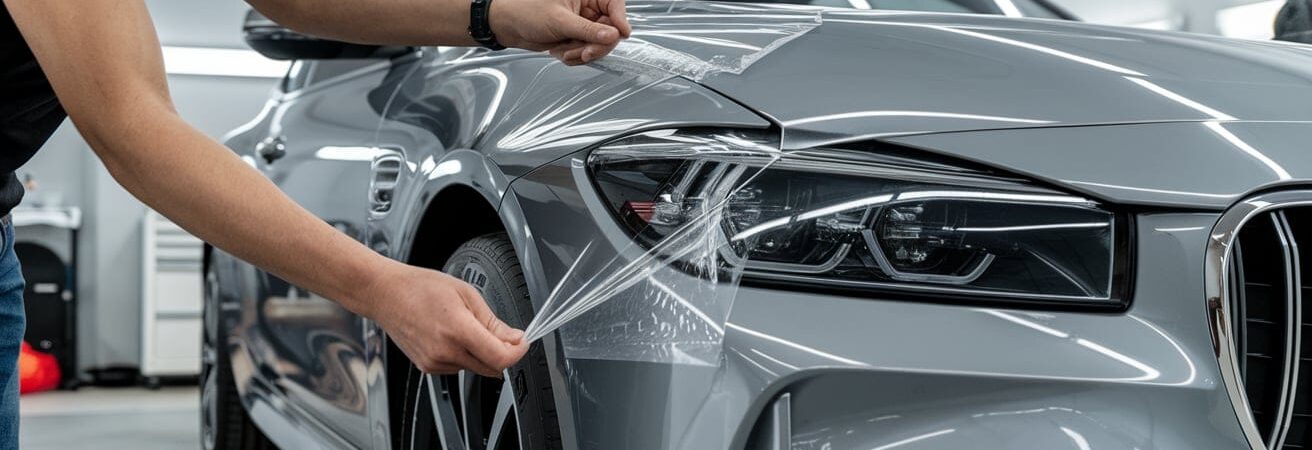
What Is Paint Protection Film (PPF)?
Paint Protection Film (PPF), often called a “clear bra,” is a transparent, durable layer made from polyurethane that is applied over a car’s painted surfaces to protect it from damage.
It acts as a shield against:
- Scratches
- Stone chips
- UV radiation
- Environmental contaminants
Modern PPF is designed with self-healing properties, meaning minor scratches disappear when exposed to heat—either from sunlight or warm water.
For new car owners, this isn’t just an accessory—it’s a long-term protection strategy.
Why Paint Protection Film Is Necessary for New Cars
A brand-new car leaves the showroom in perfect condition—but that perfection starts degrading from day one.
1. Protection Against Daily Damage
Driving conditions in Pakistan expose cars to:
- Dust storms
- Gravel roads
- Traffic congestion
- Tight parking spaces
PPF acts as a sacrificial layer, absorbing damage before it reaches your car’s original paint.
2. Preserving Resale Value
In the used car market, paint condition directly affects resale price.
A well-maintained exterior:
- Signals careful ownership
- Reduces negotiation pressure
- Attracts serious buyers faster
Even small scratches can significantly reduce perceived value.
3. Protection from Harsh Climate
In cities like Karachi, Lahore, and Islamabad, cars face:
- Intense sunlight (UV exposure)
- Heat waves
- Air pollution
These factors cause:
- Paint fading
- Oxidation
- Loss of gloss
PPF blocks UV rays and slows down chemical degradation.
4. Reduced Maintenance Effort
PPF has hydrophobic properties, meaning:
- Dirt doesn’t stick easily
- Water beads off the surface
- Cleaning becomes faster
This reduces the need for frequent polishing or detailing.
5. Self-Healing Technology
One of the biggest advantages is its ability to repair minor scratches.
When heat is applied:
- The film’s molecular structure re-aligns
- Surface scratches disappear
This keeps your car looking newer for longer.
How Paint Protection Film Works
PPF is engineered using multi-layer technology:
| Layer | Purpose |
| Top Coat | Scratch resistance and gloss |
| Polyurethane Layer | Impact absorption |
| Adhesive Layer | Strong bonding to paint |
| Backing Layer | Protection during installation |
The core material—polyurethane—is flexible and مقاوم (resistant), allowing it to absorb impacts without cracking.
Types of Paint Protection Film
Choosing the right type of PPF depends on your needs and budget.
1. Gloss PPF
- Maintains factory shine
- Ideal for most car owners
2. Matte PPF
- Converts glossy paint into matte finish
- Popular for customization
3. Self-Healing PPF
- Repairs micro-scratches automatically
- Best for long-term ownership
4. Hydrophobic PPF
- Combines water-repelling technology
- Easier cleaning and maintenance
Real-World Use Cases in Pakistan
Urban Driving (Karachi, Lahore)
- Frequent stop-and-go traffic
- Risk of scratches from bikes and rickshaws
Highway Driving
- High-speed stone chips
- Bug splatter damage
New Car Buyers
Owners of vehicles like:
- Toyota Corolla
- Honda Civic
- SUVs and imported cars
Often invest in PPF immediately after purchase to avoid early wear.
PPF vs Ceramic Coating vs Wax
Many car owners are confused between different protection options.
| Feature | PPF | Ceramic Coating | Wax |
| Scratch Protection | High | Low | None |
| UV Protection | Strong | Moderate | Limited |
| Durability | 5–10 years | 2–5 years | Weeks |
| Cost | High | Medium | Low |
| Physical Protection | Yes | No | No |
Key Insight
Ceramic coating enhances shine, but PPF provides real physical protection.
For maximum results, many car owners combine both.
Cost of Paint Protection Film in Pakistan
Cost depends on coverage, brand, and installer expertise.
Average Price Range
| Coverage | Cost (PKR) |
| Partial (Front bumper, hood) | 60,000 – 150,000 |
| Full Car | 250,000 – 800,000 |
What Affects Cost?
- Film brand (premium vs generic)
- Vehicle size
- Installation quality
- Warranty
Is It Worth It?
If you plan to keep your car for 3–5 years or more, PPF often pays for itself by preserving resale value.
How to Choose the Best PPF Installer Near You
Searching “PPF near me” will show many options—but not all are equal.
Checklist Before Choosing:
- Certified installer (brands like 3M, XPEL, Llumar)
- Clean, dust-free installation environment
- Portfolio of previous work
- Written warranty (5–10 years)
Red Flags:
- Extremely low pricing
- No warranty
- Poor finishing or bubbles
Service Areas to Consider:
- DHA Karachi
- Gulshan-e-Iqbal
- Bahria Town Lahore
- Islamabad sectors
PPF Installation Process (Step-by-Step)
Step 1: Car Inspection
Check for paint defects or scratches.
Step 2: Surface Preparation
Deep cleaning removes contaminants.
Step 3: Film Cutting
Precision cutting software ensures accurate fit.
Step 4: Application
Film is applied using a slip solution for alignment.
Step 5: Heat Activation
Edges are sealed using heat guns.
Step 6: Final Inspection
Ensures no bubbles or imperfections.
Pros and Cons of Paint Protection Film
Pros
- Superior scratch protection
- Preserves original paint
- Self-healing technology
- Long lifespan
Cons
- High upfront cost
- Requires professional installation
- Low-quality films may yellow
Common Mistakes to Avoid
- Choosing the cheapest installer
- Applying PPF on unprepared paint
- Ignoring warranty details
- Expecting PPF to prevent all damage
Maintenance Tips for Long-Term Performance
To maximize lifespan:
- Wash regularly using mild shampoo
- Avoid harsh chemicals
- Do not use abrasive polishing tools
- Park in shaded areas when possible
Proper care ensures PPF lasts up to 10 years.
Decision Framework: Should You Get PPF?
You Should Get PPF If:
- You just bought a new car
- You drive daily in busy areas
- You care about resale value
You Can Skip or Delay If:
- You plan to sell the car within a year
- Budget is limited
- You rarely drive
When Is the Best Time to Apply PPF?
The ideal time is immediately after buying a new car.
This ensures:
- No existing scratches
- Maximum protection from day one
Can You Install PPF Yourself?
DIY kits exist, but full-car installation is complex.
Challenges include:
- Air bubbles
- Misalignment
- Improper sealing
Professional installation is strongly recommended.
How Long Does PPF Last in Pakistan’s Climate?
Due to heat and UV exposure:
- High-quality PPF: 5–10 years
- Low-quality PPF: 2–3 years
Climate conditions make quality selection critical.
Does PPF Affect Car Appearance?
No. High-quality PPF is nearly invisible and can even enhance gloss.
Matte PPF can change the finish intentionally for styling.
Does PPF Increase Resale Value?
Yes. Cars with protected paint:
- Sell faster
- Require fewer repairs
- Maintain better condition
Buyers prefer vehicles with original paint intact.
Internal Resource
If you’re comparing protection options, read our guide ceramic coating vs PPF to understand which suits your needs better.
Conclusion or Final Thoughts
Paint Protection Film is one of the smartest investments you can make after buying a new car in Pakistan.
It protects against daily wear, harsh climate, and long-term paint damage—while preserving your car’s value and appearance.
If you drive regularly in cities like Karachi, Lahore, or Islamabad, PPF is not just an upgrade—it’s a necessity.
Start by evaluating your budget, choose a reputable installer, and protect your vehicle from day one.
FAQs
1. Is paint protection film worth it in Pakistan?
Yes, especially due to harsh weather and road conditions. It protects your car and preserves resale value.
2. Does PPF damage car paint?
No, high-quality PPF is safe and can be removed without harming the original paint.
3. How long does PPF last?
Typically 5–10 years depending on quality and maintenance.
4. Is PPF better than ceramic coating?
PPF offers physical protection, while ceramic coating enhances shine and water resistance.
5. Can PPF be removed later?
Yes, it can be safely removed by professionals.
6. What is the cost of PPF in Pakistan?
Partial coverage costs around PKR 60,000–150,000, while full coverage can go up to PKR 800,000.
7. Does PPF turn yellow?
Low-quality films may yellow, but premium brands resist discoloration.
8. Can I wash my car after PPF installation?
Yes, but wait a few days and use gentle cleaning methods.
9. Is PPF necessary for new cars?
Yes, applying it early prevents damage from the start.
10. Which areas of the car need PPF the most?
Front bumper, hood, side mirrors, and door edges are most vulnerable.
11. Can PPF protect against major accidents?
No, it protects against minor damage like scratches and chips—not collisions.
12. Should I get full PPF or partial?
Full PPF offers maximum protection, while partial is a budget-friendly option for high-impact areas.